
Bring what you’re working on
Start with the real assignment, question, material, or idea.
How it works
Good support should make the next step clearer while leaving the learner responsible for the thinking, choices and work. The Study Coach is built around that: Eddie stays beside the work to explain, question and guide, while the learner keeps ownership of the thinking and the work itself.
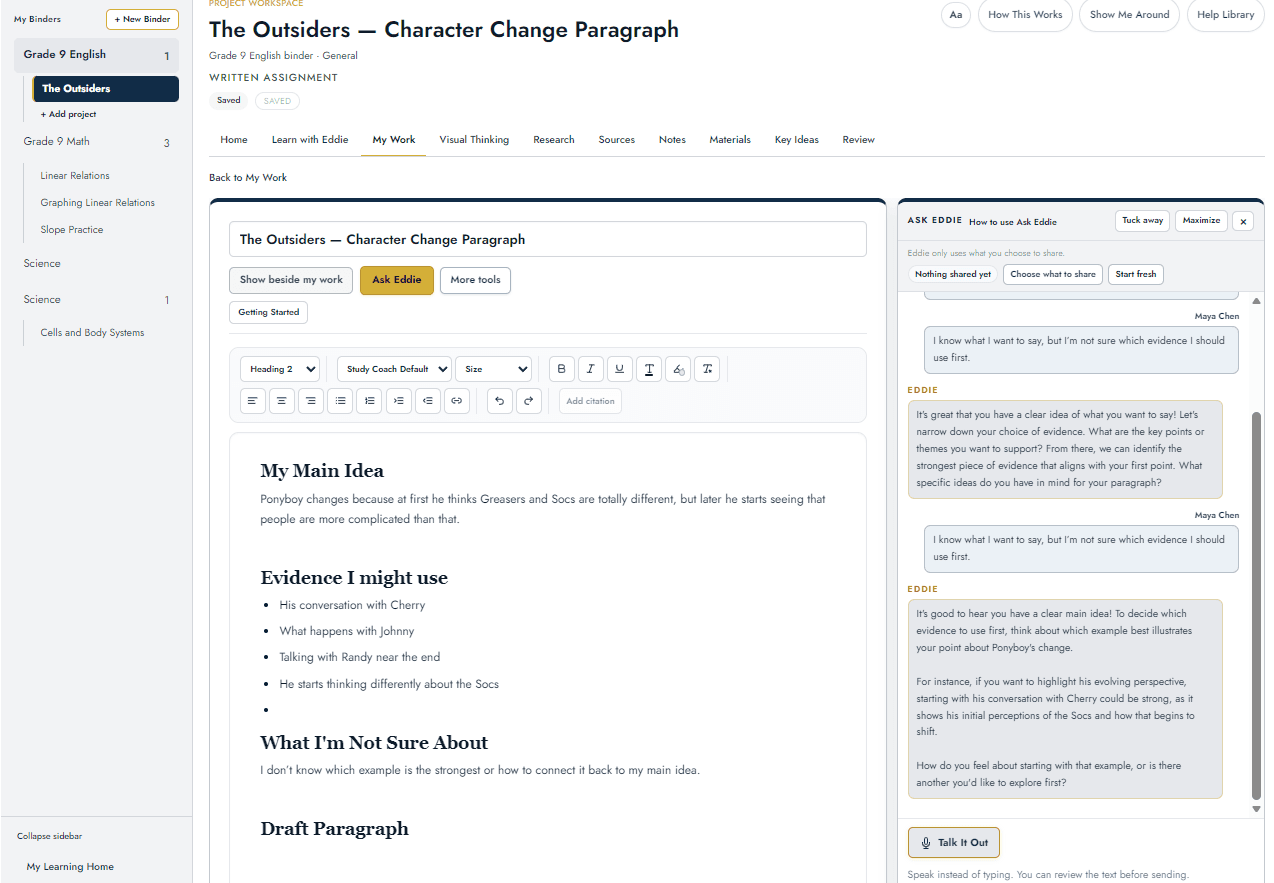
You don’t have to arrive with the perfect question or even know exactly what is wrong. Bring the assignment, the problem, the notes, or the idea that isn’t coming together yet. The Study Coach helps you figure out what you need, work through it, and keep what matters so you can come back to it later.
Bring what you’re working on
Start with the real assignment, question, material, or idea.
Get unstuck in the way that helps
Learn the missing skill, ask Eddie, Talk It Out, or see the idea another way.
Do the thinking and the work
Write, calculate, research, organise, revise, practise, and make decisions yourself.
Keep what matters
Save, review, practise, plan, and return with more confidence the next time.
Real work first
Start with the thing that is actually in front of you: an assignment, a math problem, notes, research, a reading, or an idea you can’t quite organise yet. The Study Coach gives that work somewhere to live, so the learner can think on the page instead of trying to squeeze the whole learning process into a chat.
If part of the problem is a skill they need to learn first, they can step into Learn, work on that piece, and come back.
When the work is French from school, French Language Practice is there for Core French and French Immersion students: their own vocabulary, listening, speaking, and help with a worksheet.
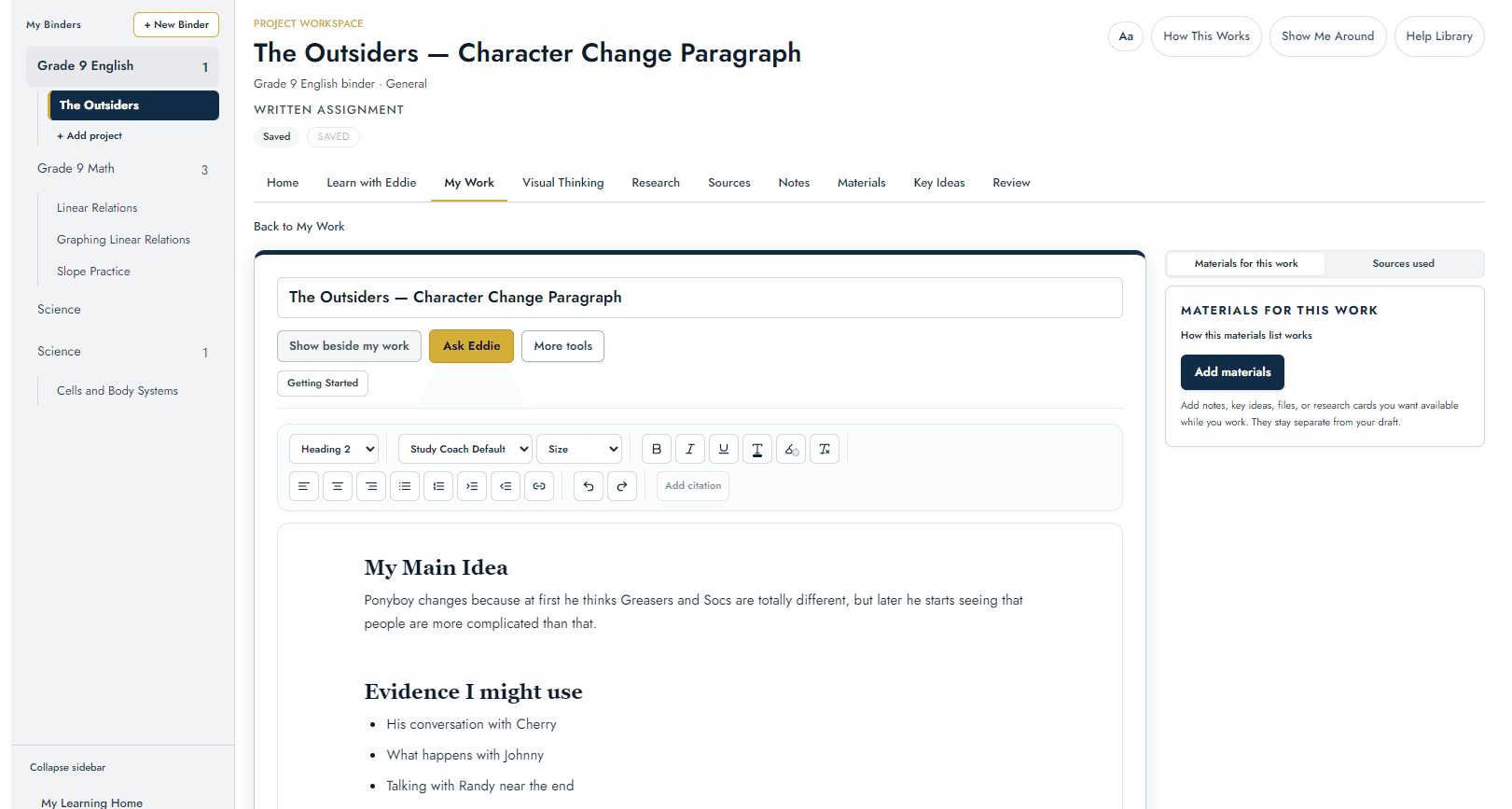
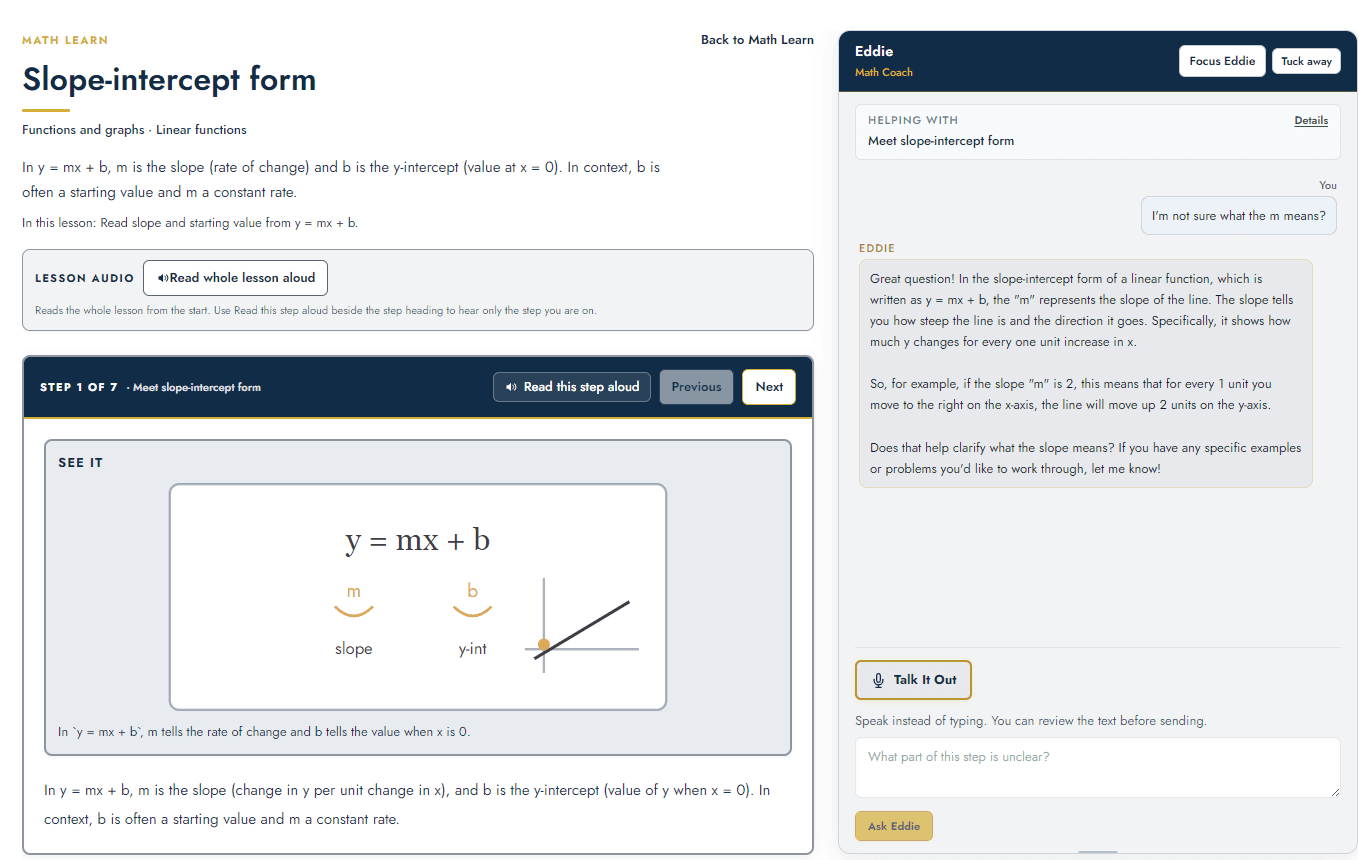
Sometimes getting unstuck means learning something first. Math, Reading, Grammar and Notes Learn give the learner a place to strengthen the skill they need, with Eddie available when another explanation helps. Then they can bring that understanding back to the work they were trying to do.
Talk It Out
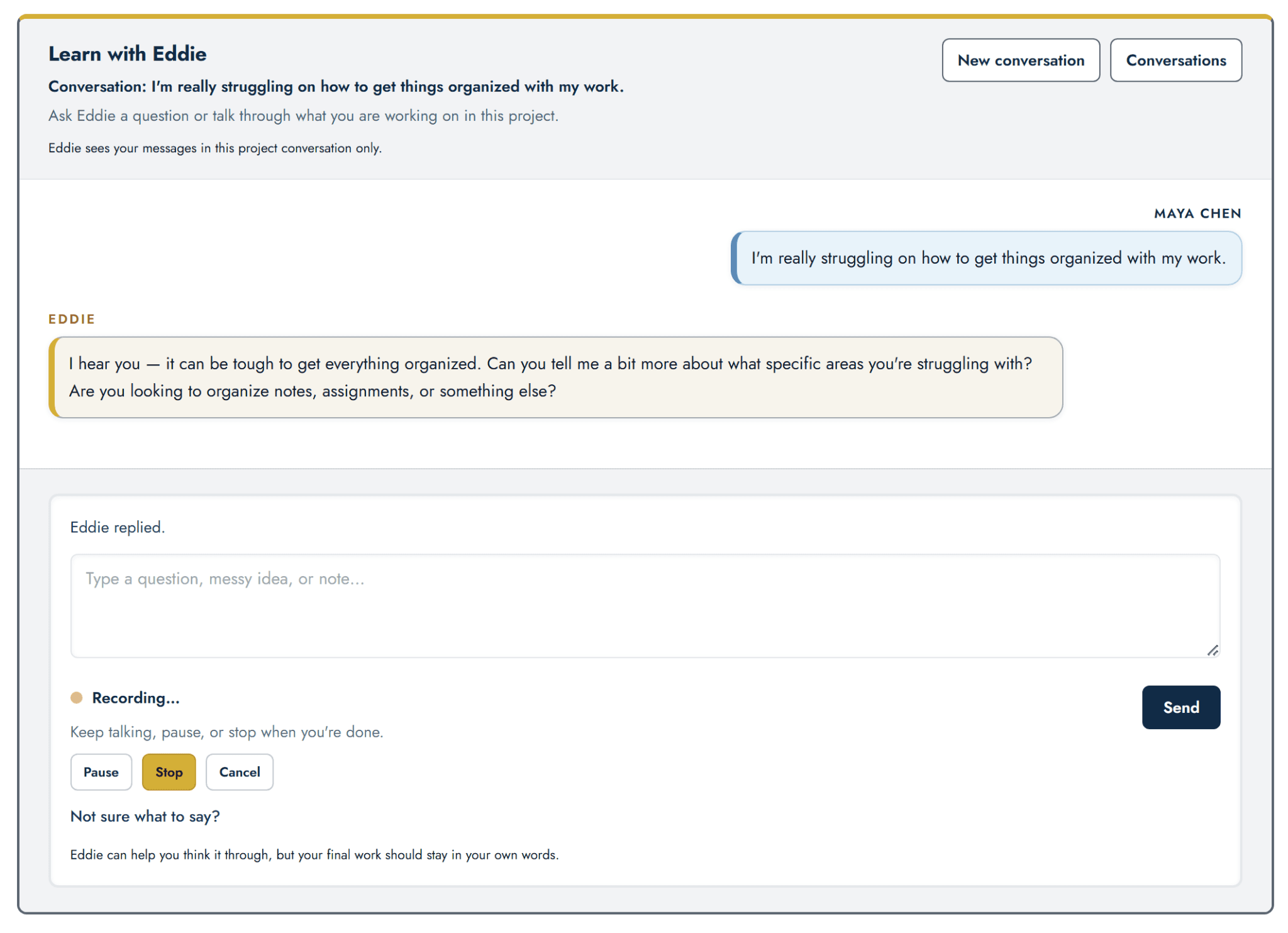
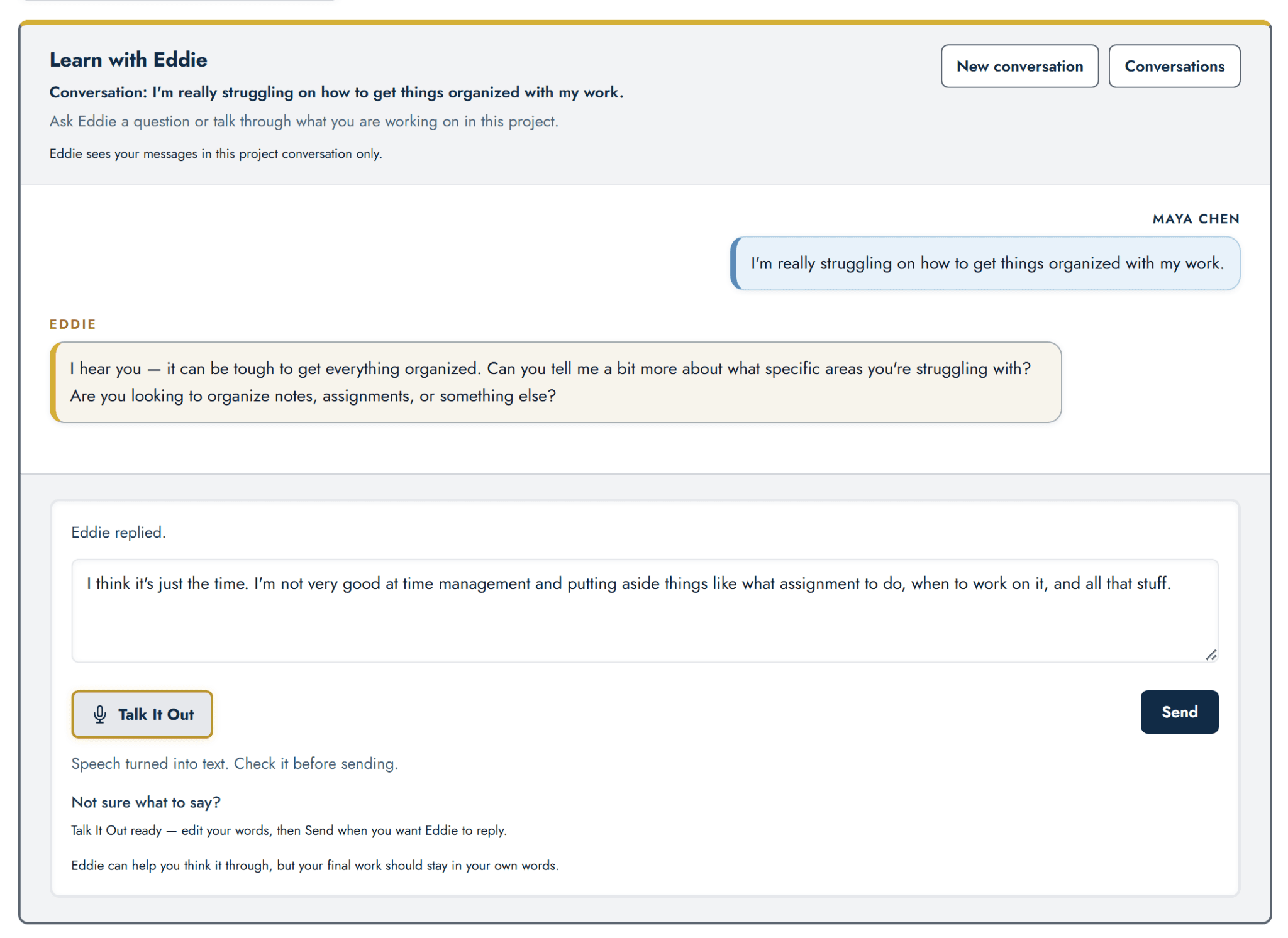
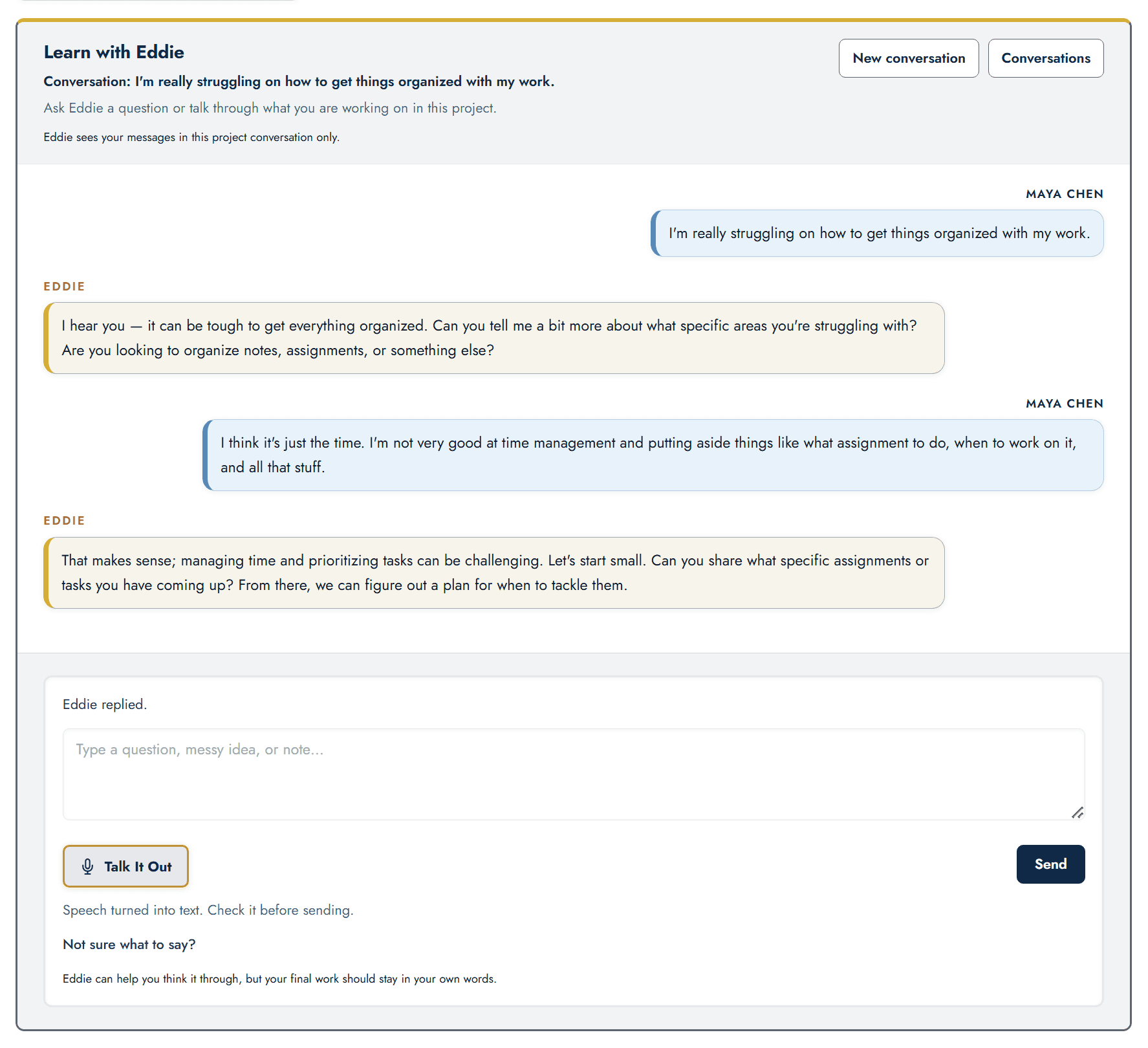
Type it. Say it. Hear it. See it. Learners can use the microphone to say the messy version first, then read and edit their words before deciding what to send. The writing stays theirs. Eddie is there for the next move, not to invent the assignment.
Eddie can also speak responses aloud, and many Learn lessons include read-aloud support, so hearing an explanation is available when that works better than reading one.
01
Use the microphone when the thought is still messy. You do not have to type the polished version to begin.
02
Speech becomes editable writing. Read it back, change a word, or keep going until it sounds like what you meant.
03
You decide what to send. The conversation with Eddie can continue beside the work, not instead of it.
Sometimes the learner needs an explanation. Sometimes they want a step checked. Sometimes they know what they mean but can’t get it onto the page. Eddie can meet those moments differently without quietly taking over the task.
The learner still writes, chooses, calculates, revises and decides what belongs in the work.
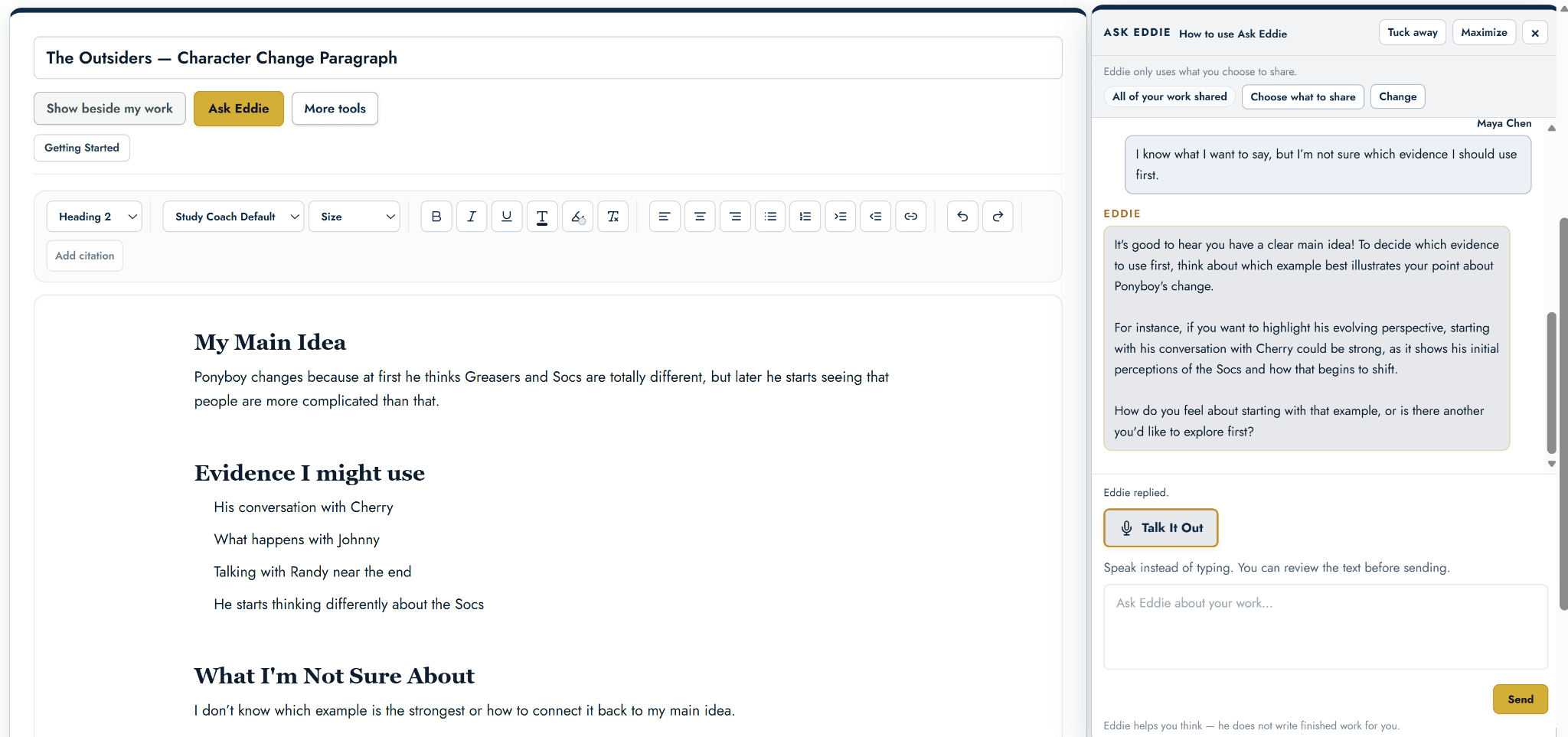
Math Work keeps the graph, the work pad and the learner’s reasoning together in one place. Visual Thinking gives ideas a structure you can see through flowcharts, mind maps, timelines and Venn diagrams. Sometimes seeing the relationship is what finally makes it click.
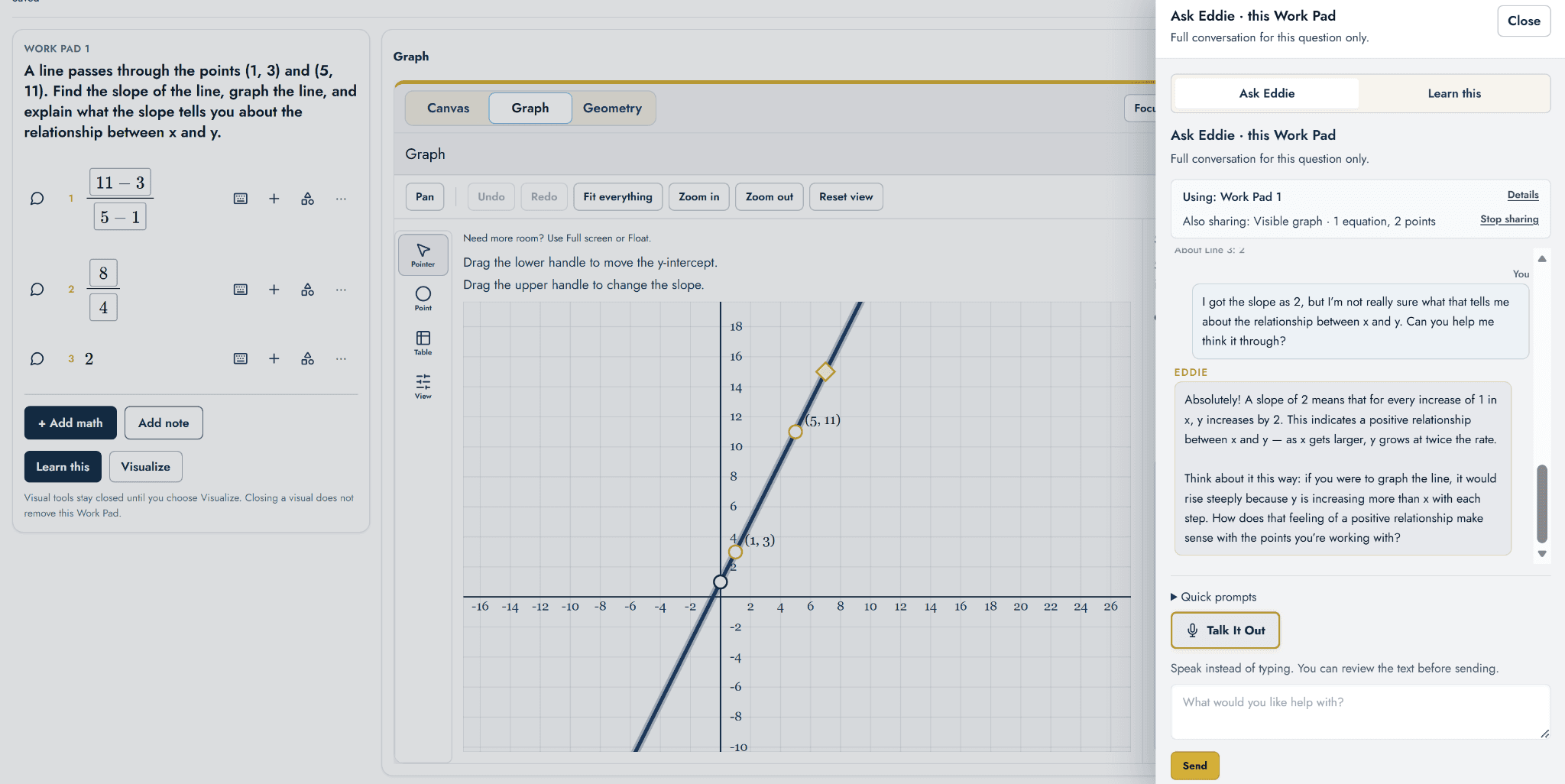
The learner keeps the pencil. Eddie coaches the path beside the graph and the work pad.
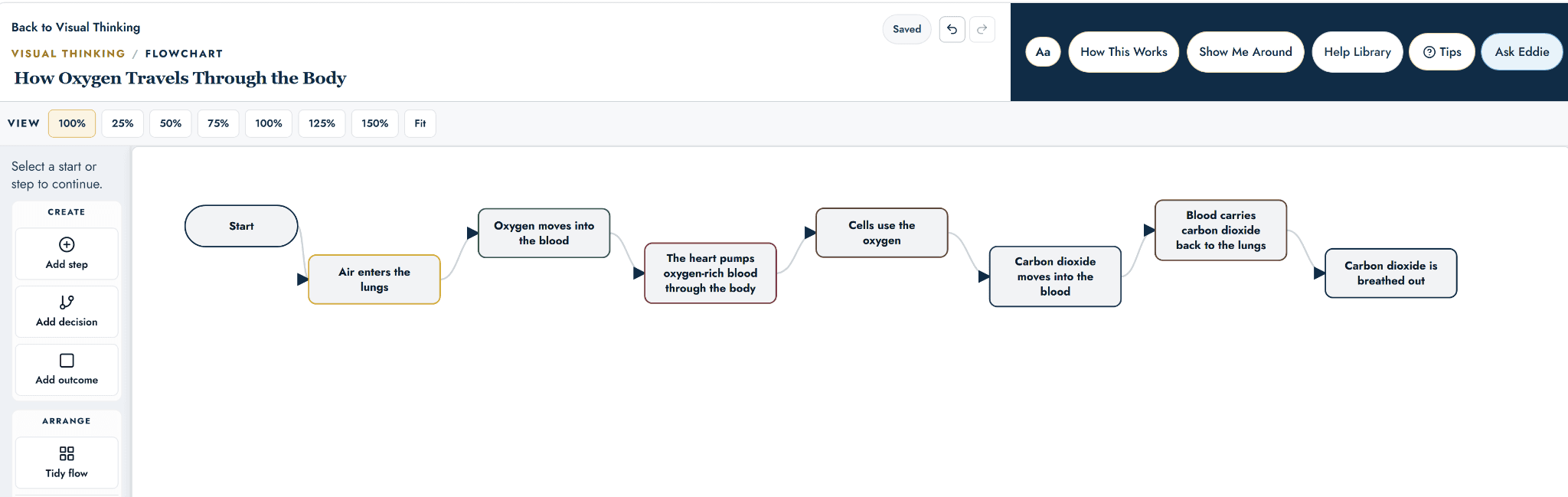
Visual Thinking gives ideas a structure you can return to — not just a picture to look at.
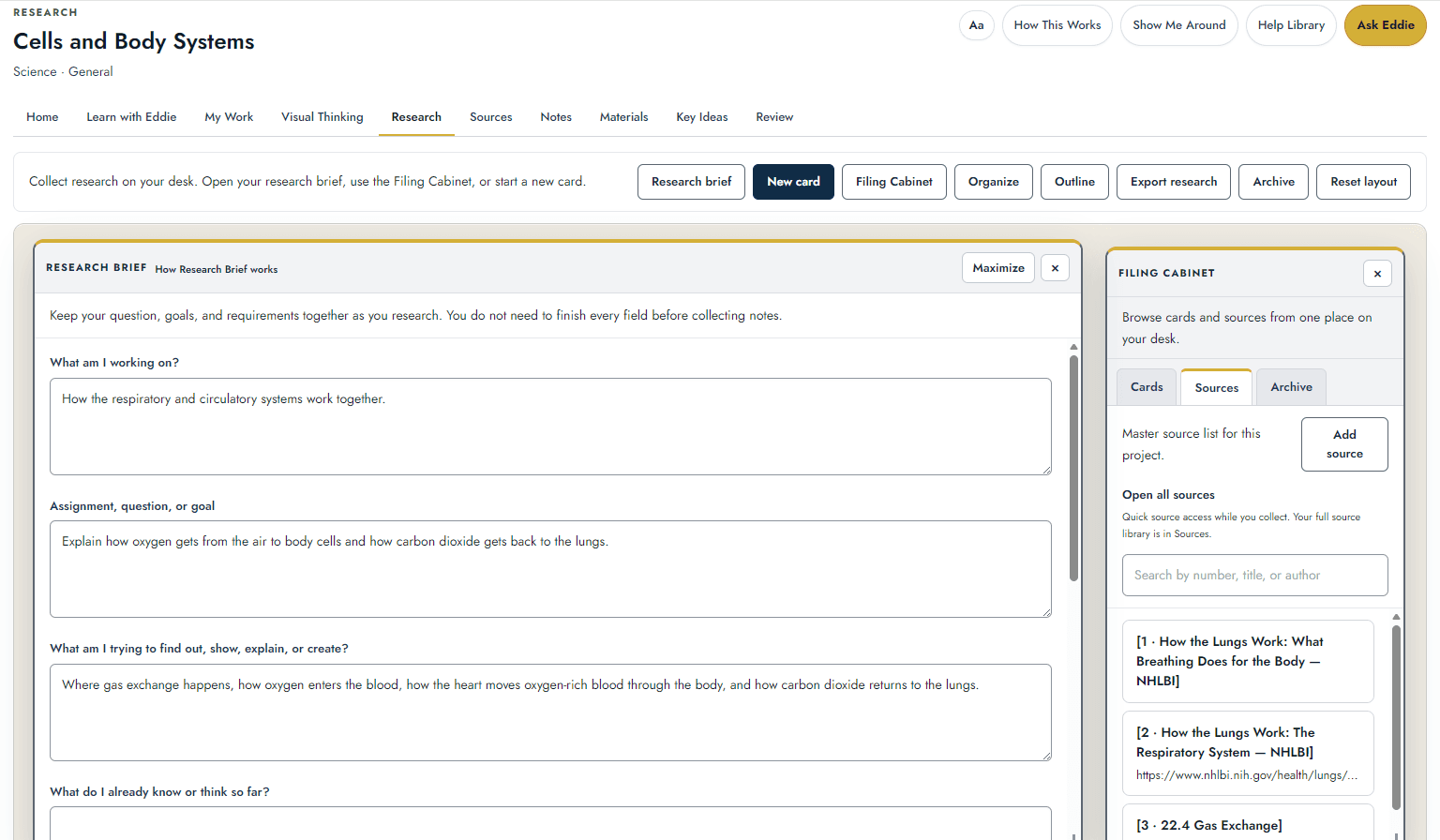
Real learning leaves a trail: notes, materials, sources, questions, drafts, calculations, plans and things worth coming back to. The Study Coach keeps those pieces connected so the learner can find the thread again instead of starting from scratch every time.
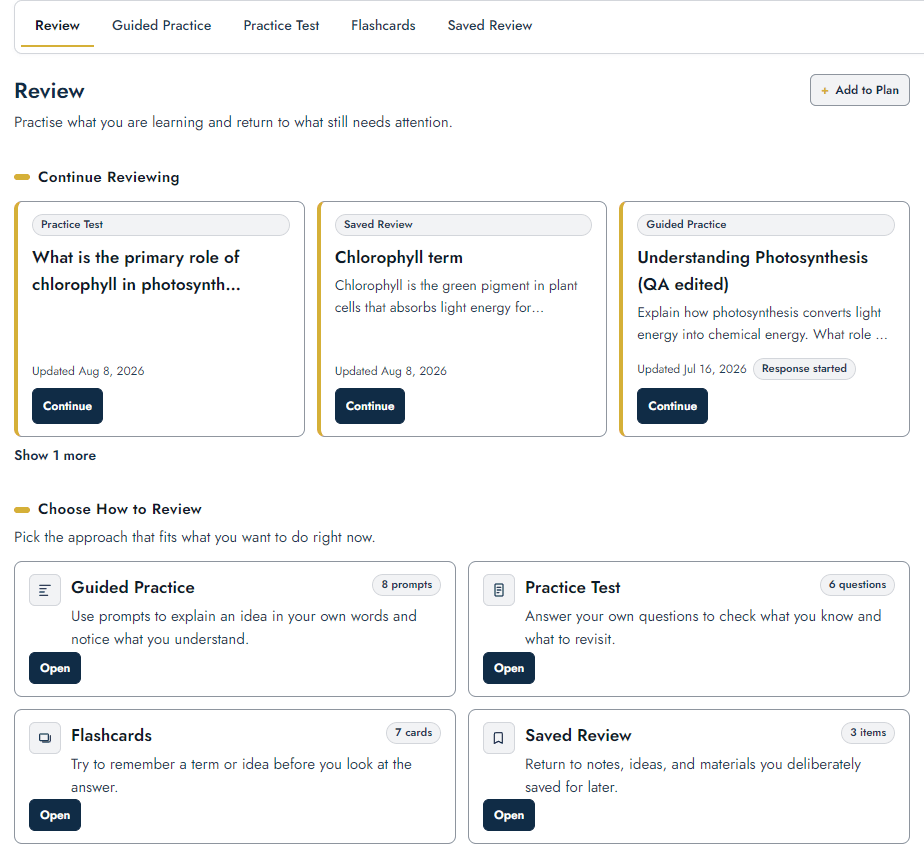
Review
Seeing something once is not the same as remembering it later. Review gives learners different ways to come back: save what matters, practise recalling it, explain the idea in their own words, or check what they understand.
Good support should help a learner become more able to handle the next difficult moment. Over time, that can mean knowing how to begin, recognising what is confusing, choosing a useful strategy, checking their own reasoning, and knowing when asking for help is the right next step.
Independence does not mean doing everything alone. It means becoming more confident about what to do when learning gets hard.
Fourteen days to try the workspace, Learn, Review, Math Work, Visual Thinking, and Eddie — with no credit card required.
No credit card required.